A Little Bit of Rain
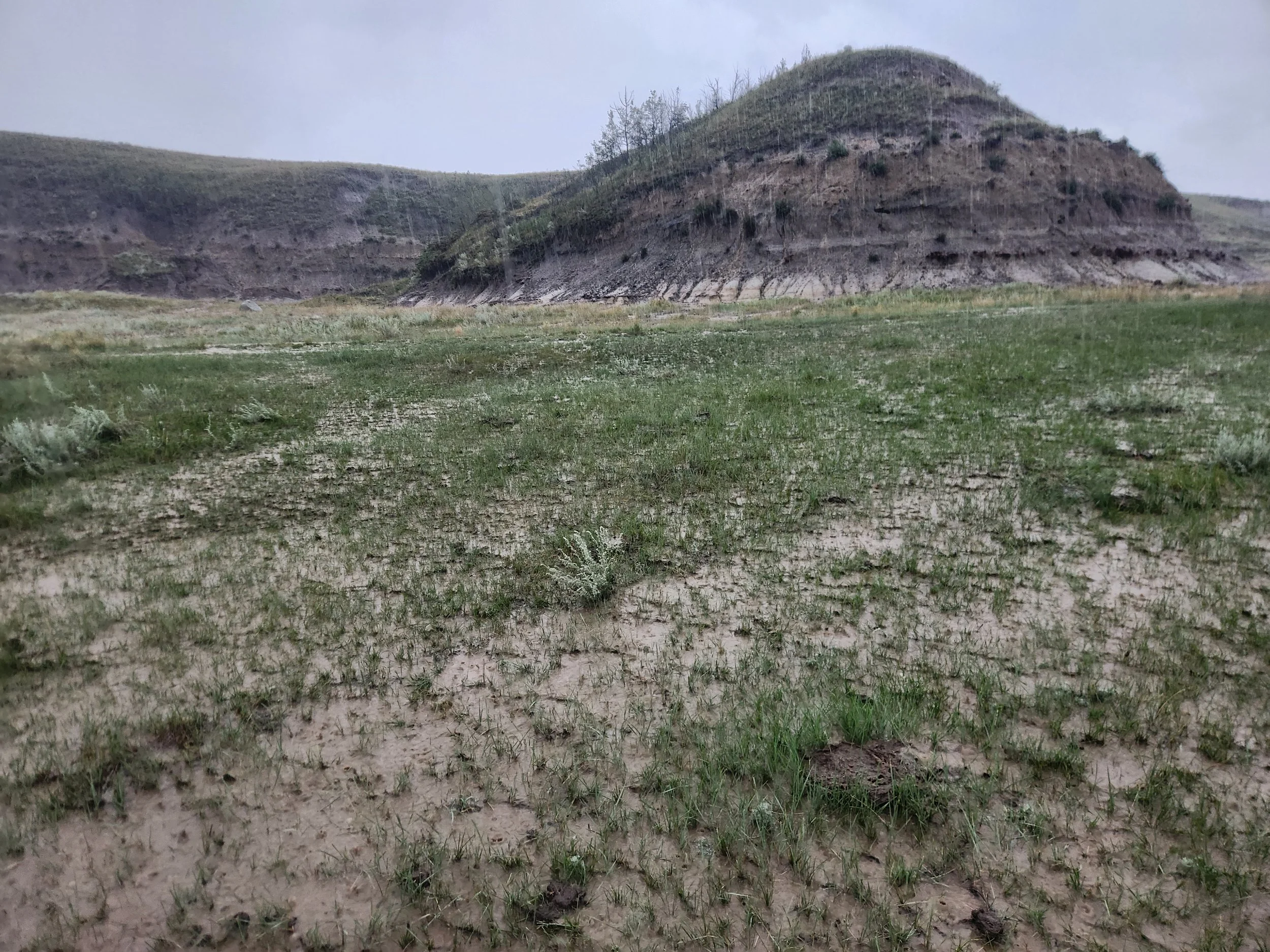
The nature of the valley: the slope and the soils, means that runoff happens quickly and in large quantities. Whether this is from a regular summer rain or snow runoff in the spring, everything flows downstream quickly.
Soil disturbance, whether mechanical removal of soil and vegetation from mining or compaction from vehicle traffic creates significant changes in how much runoff impacts the valley through erosion. This sensitive landscape is highly impacted by even weekly traffic.
Deep-rooted native vegetation and preventing disturbance to the stabilized surfaces in the valley are critical to preventing erosion.
These videos were taken August 3, 2025 during a regular rainstorm event. In less than 30 minutes, ankle-deep streams were running down through the valley, with all flat places covered in rainwater. You can clearly see the vegetation holding the soil in place. It is critical to keep this vegetation in place.
The cumulative effects of heavily travelled roads creating erosion-prone areas, areas of stripped vegetation and topsoil, and areas where harder layers are removed could create extreme risk of erosion, which would travel downstream. Negative impacts on water quality due to siltation are a deep concern for local landowners and downstream users.
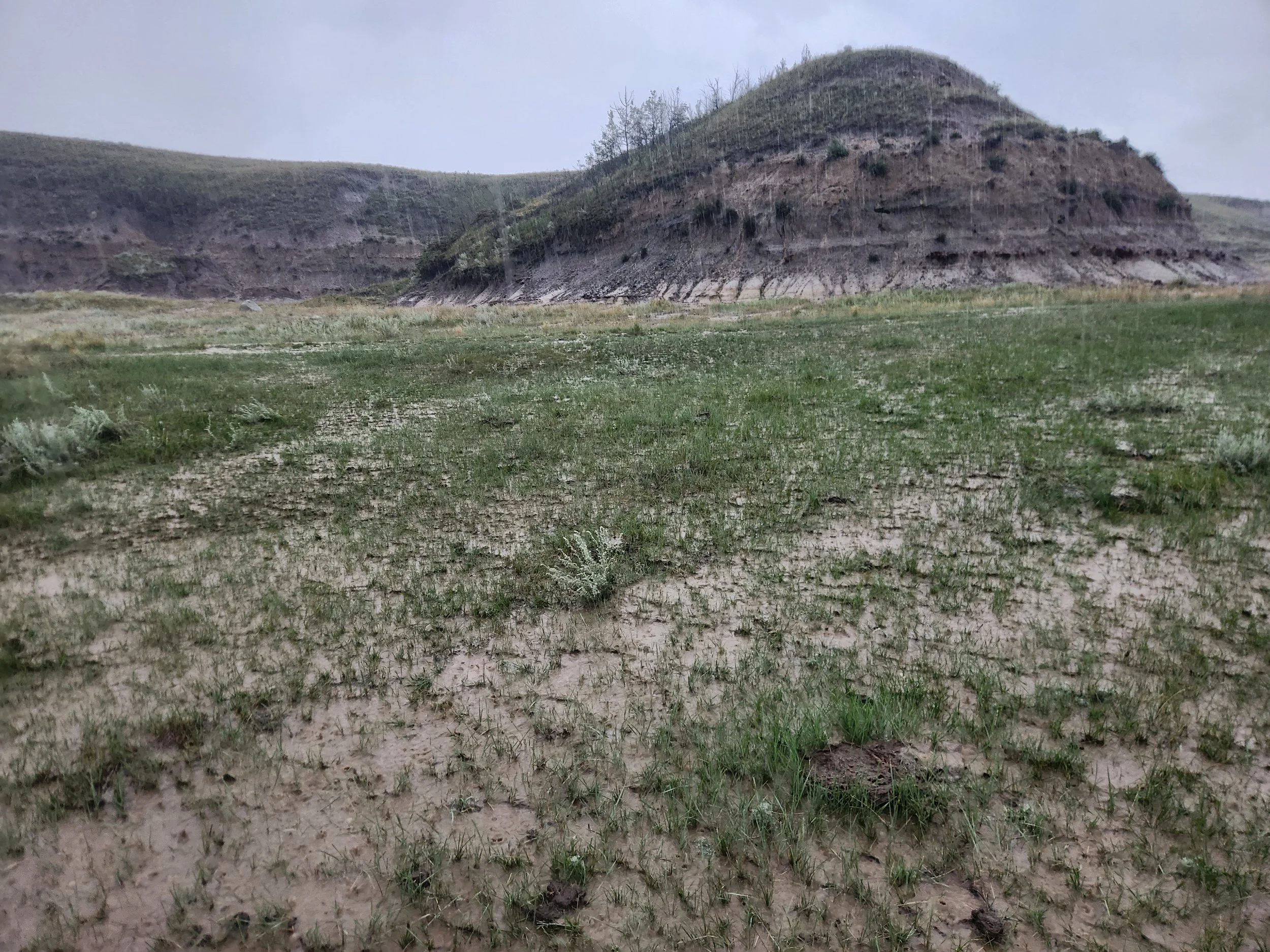
The deep roots of native grasses adapted for this landscape are stable, which is what holds the soil in place even during large runoff events and also makes natural grasslands an significant carbon sink.
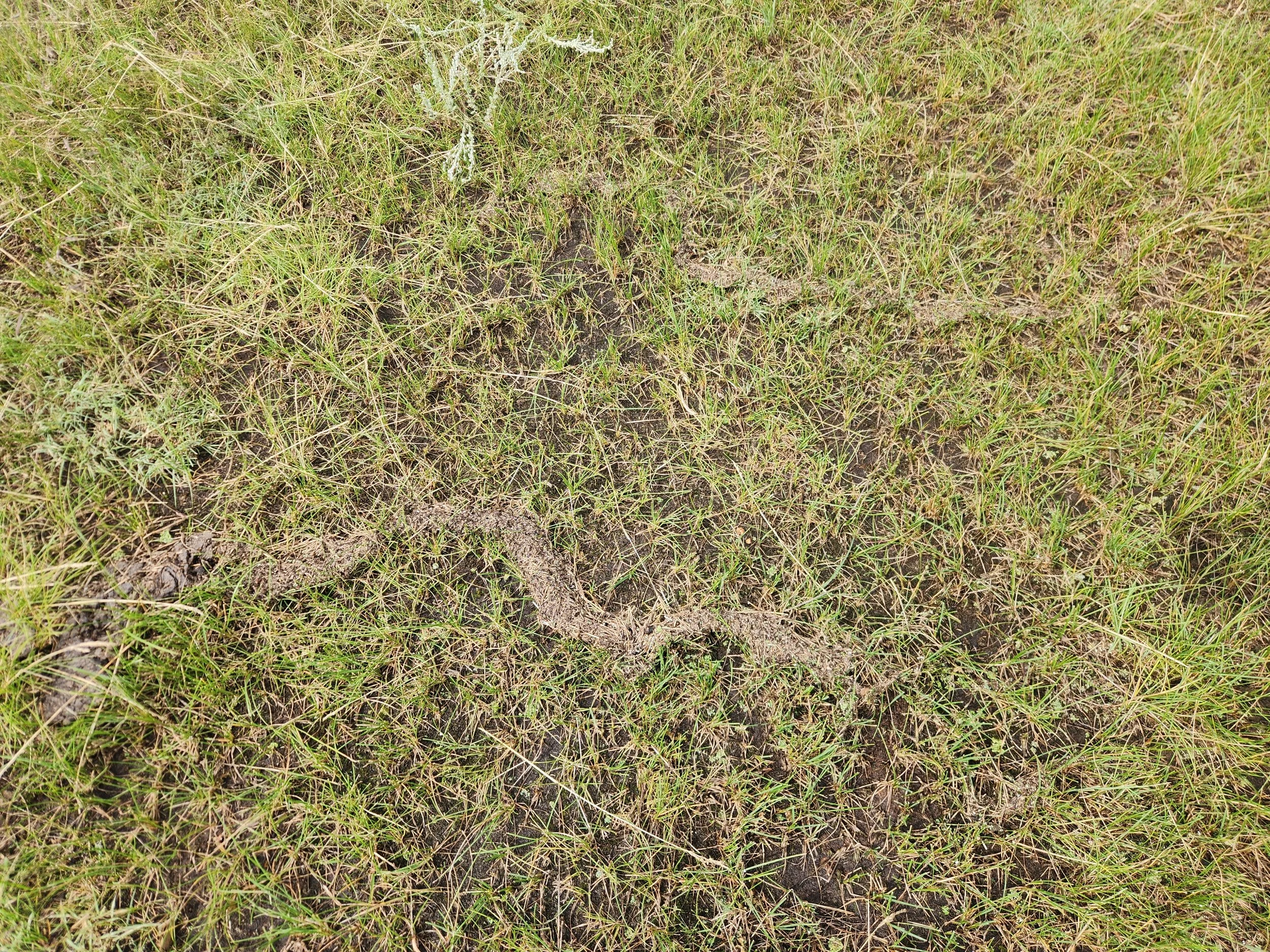
Below: The “bridging” of debris on the native grasses.
Photo: August 3, 2025, after the storm.